

Reflections and academic references
An overview of my evolving teaching philosophy, curriculum alignment, and scholarly foundations underpinning play-based numeracy development from birth to eight years.

Pedagogical reflection and shift in practice
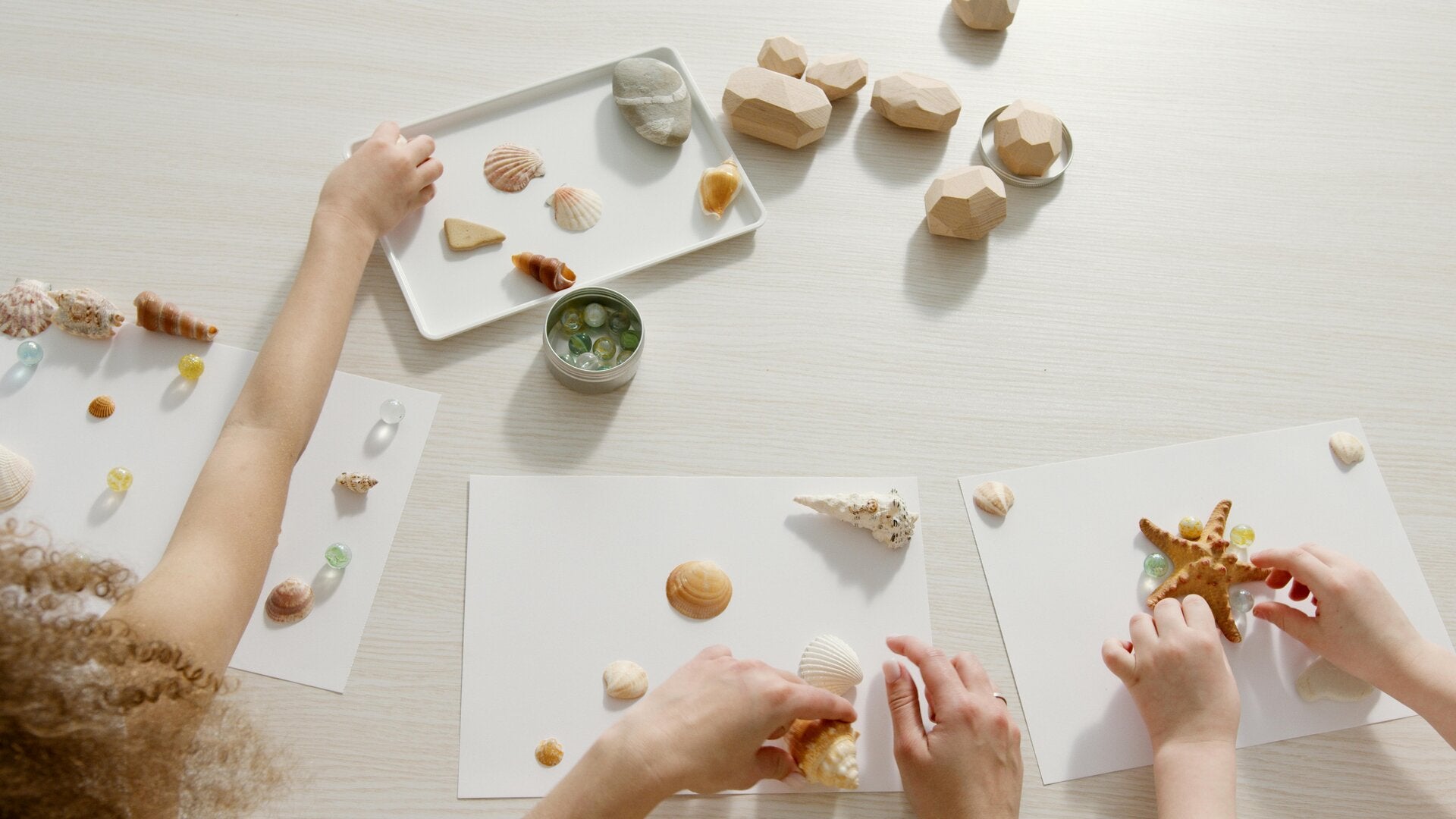
Throughout EDU107, I have developed a deeper appreciation of the importance of mathematical reasoning and conceptual understanding alongside procedural knowledge. Children build deep mathematical knowledge through playful exploration, intentional questioning, and everyday interactions.
In future classroom practice, I intend to implement proposed resources—such as counting games, pattern-making, place value activities, and practical measurement explorations—that anchor mathematics in children's everyday lives. By scaffolding tasks to individual developmental stages, I strive to foster confidence, genuine curiosity, and positive dispositions towards numeracy.
Theoretical framework and curriculum integration
My teaching approach is deeply informed by constructivist learning theory. Drawing on Piaget’s emphasis on active manipulation of the environment and Vygotsky’s sociocultural theory of scaffolding, I view educators as facilitators who provide responsive guidance within each child's zone of proximal development (Piaget, 1952; Vygotsky, 1978).
These principles directly align with the Early Years Learning Framework (EYLF V2.0), which highlights play-based learning and inquiry, as well as the NSW Mathematics K–6 Syllabus (2022), which foregrounds mathematical reasoning, problem-solving, and communicative skills in primary schooling (AGDE, 2022; NESA, 2022).

Reference
Australian Government Department of Education. (2022). Belonging, being and becoming: The early years learning framework for Australia (V2.0). https://www.acecqa.gov.au/sites/default/files/2023-01/EYLF-2022-V2.0.pdf
Carbonneau, K. J., Marley, S. C., & Selig, J. P. (2013). A meta-analysis of the efficacy of teaching mathematics with concrete manipulatives. Journal of Educational Psychology, 105(2), 380–400. https://doi.org/10.1037/a0031084
Clements, D. H., & Sarama, J. (2014). Learning and teaching early math: The learning trajectories approach (2nd ed.). Routledge.
NSW Education Standards Authority. (2022). Mathematics K–10 syllabus. https://curriculum.nsw.edu.au/learning-areas/mathematics/mathematics-k-10-2022
Piaget, J. (1952). The origins of intelligence in children. International Universities Press.
Vygotsky, L. S. (1978). Mind in society: The development of higher psychological processes. Harvard University Press.
Create Your Own Website With Webador